Every spring, the same thought hits. The closets are full of things nobody uses. The kitchen drawer with the mystery cables is somehow worse than last year. The garage has become a holding zone for everything that didn’t have a home anywhere else. Decluttering has a reputation for being overwhelming, and that reputation is mostly earned.
Pulling everything out of a room and then putting most of it back in slightly different spots doesn’t actually solve anything. It just moves the problem around. A proper spring reset looks different. It’s slower, more deliberate, and much more effective.
Start Smaller Than You Think You Should
The number one reason decluttering projects stall out is that people start too big. They decide to do the whole house in a weekend. Plus, they’ll pull open every cabinet simultaneously, and end up surrounded by so much stuff that the whole thing feels impossible.
Then they put it all back. The better approach is to pick one drawer, one shelf, or one corner of one room. Finish it completely before moving on. That first small win creates momentum. That is what actually gets a whole house done over time.
Make Real Decisions, Not Maybes
Every item in the home falls into one of three categories: it’s useful, it’s meaningful, or it’s neither. The problem is the maybe pile. The things that might be useful someday, the duplicates kept just in case, the gifts that feel too guilty to donate. The maybe pile is where decluttering goes to die.
A useful rule of thumb: if an item hasn’t been used in over a year and there’s no specific occasion coming up where it will be needed, it can go. Sentimental items deserve more grace. However, even those benefit from some honest assessment. Keeping ten things that carry genuine meaning is better than keeping fifty things out of vague attachment.
Think in Terms of Categories
One approach that tends to work is gathering every item in a category together before making decisions. All the linens from every closet in the house, in one place. All the books. All the tools.
Seeing the full volume of what’s been accumulated in any one category makes it much easier to make clear decisions. It also prevents the common problem of decluttering the bedroom closet only to discover three more boxes of the same stuff in the garage.
Invest in Storage That Works
Once the actual clutter is gone, the remaining items need homes that make sense. This is where a lot of people get it backwards. They buy bins and baskets before they declutter. Then, they’ll fill them with things they don’t actually need, and wonder why the house still feels chaotic. Storage only works after the decisions have been made. Once there’s a clear sense of what’s staying, choosing the right containers becomes straightforward.
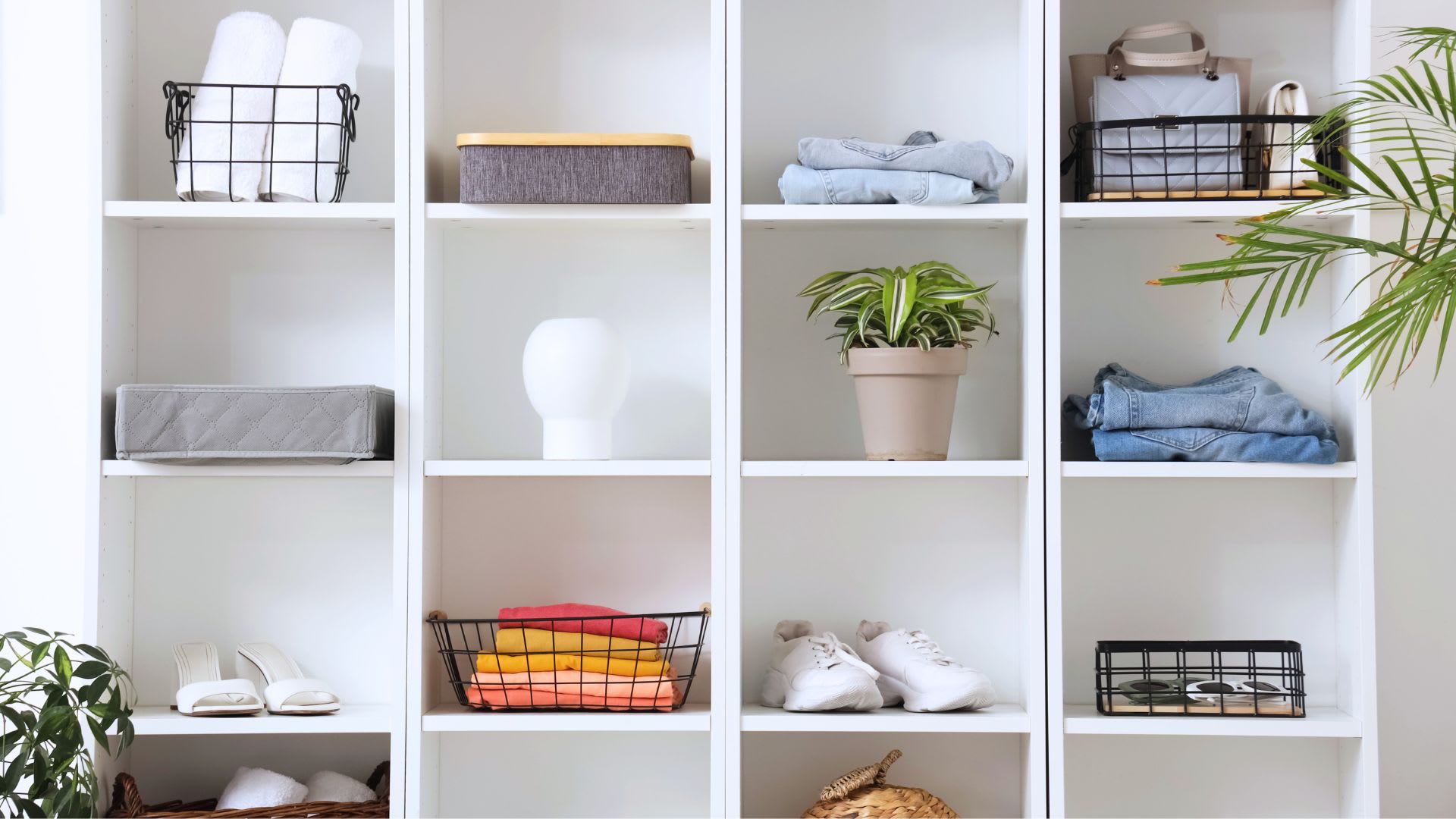
For visible storage in living areas, natural materials like woven baskets, linen bins, and wooden trays keep things looking intentional rather than utilitarian. Glass canisters with wood lids work well in kitchens and pantries because they make the contents visible, which actually encourages keeping things tidy.
Stackable boxes with lids are useful for things that need to stay out of sight but accessible. The goal is storage that fits the specific space and specific items, not a collection of containers that gets shoved into whatever gap is available.
Don’t Forget the Spaces People Don’t See
The decluttering areas that get the most attention are usually the most visible ones. Living rooms, kitchen counters, entryways. But the spaces that make a real difference in daily life are often the hidden ones. The linen closet that takes ten minutes to find a matching pillowcase in. The bathroom cabinet where things fall out every time the door opens.
The junk drawer that has become more of a junk zone. These aren’t glamorous to tackle, but cleaning them out has an outsized effect on how a home actually feels to live in day to day.
Why It Matters Beyond Aesthetics
A decluttered home is genuinely easier to clean, easier to maintain, and less mentally taxing to spend time in. Research consistently shows that cluttered environments contribute to elevated stress levels, and most people notice the difference in how they feel at home after a real clear-out.
For anyone thinking about selling in the coming years, decluttering is also one of the highest-return preparations available. Buyers need to be able to imagine themselves in a space, and that’s much harder to do when every surface is full and every closet is packed. A home that feels spacious and organized shows better, photographs better, and often sells faster.
Make Room for You
Decluttering isn’t about having less for the sake of it. It’s about making room for the things that actually matter and making a home easier and more enjoyable to live in. Done with a real system instead of a surge of spring motivation, it’s one of the most satisfying home projects available. Start small. Make real decisions. Don’t buy the baskets until the decluttering is done.