Key Takeaways
- Mayfair spans just over one square mile, and strict heritage protections keep supply permanently limited.
- Prime properties regularly trade above £3,000 per square foot, with trophy assets reaching considerably higher.
- Demand is driven by international buyers prioritizing capital preservation, not rental income.
- Most stock consists of listed Georgian and Victorian buildings, with very little new development entering the market.
- International buyers face an additional two percent SDLT surcharge and should review leasehold terms carefully before proceeding.
- Local expertise matters significantly at this price point.
One of the World’s Most Coveted Luxury Real Estate Markets
There are prestigious addresses, and then there is Mayfair. Tucked between Hyde Park and Regent Street in the heart of central London, this storied neighborhood has been synonymous with wealth, influence, and architectural grandeur for centuries.
Today, it remains one of the most sought-after luxury real estate markets on the planet, drawing high-net-worth buyers from across Europe, the Middle East, Asia, and North America. For buyers considering a move into ultra-prime London property, Mayfair is the benchmark everything else gets measured against.
A Neighborhood Built on Legacy
Mayfair takes its name from an annual fair held on the site during the 1700s. The area was developed into a residential district for London’s aristocracy and upper class during the Georgian era, and that sense of exclusivity has never really left.
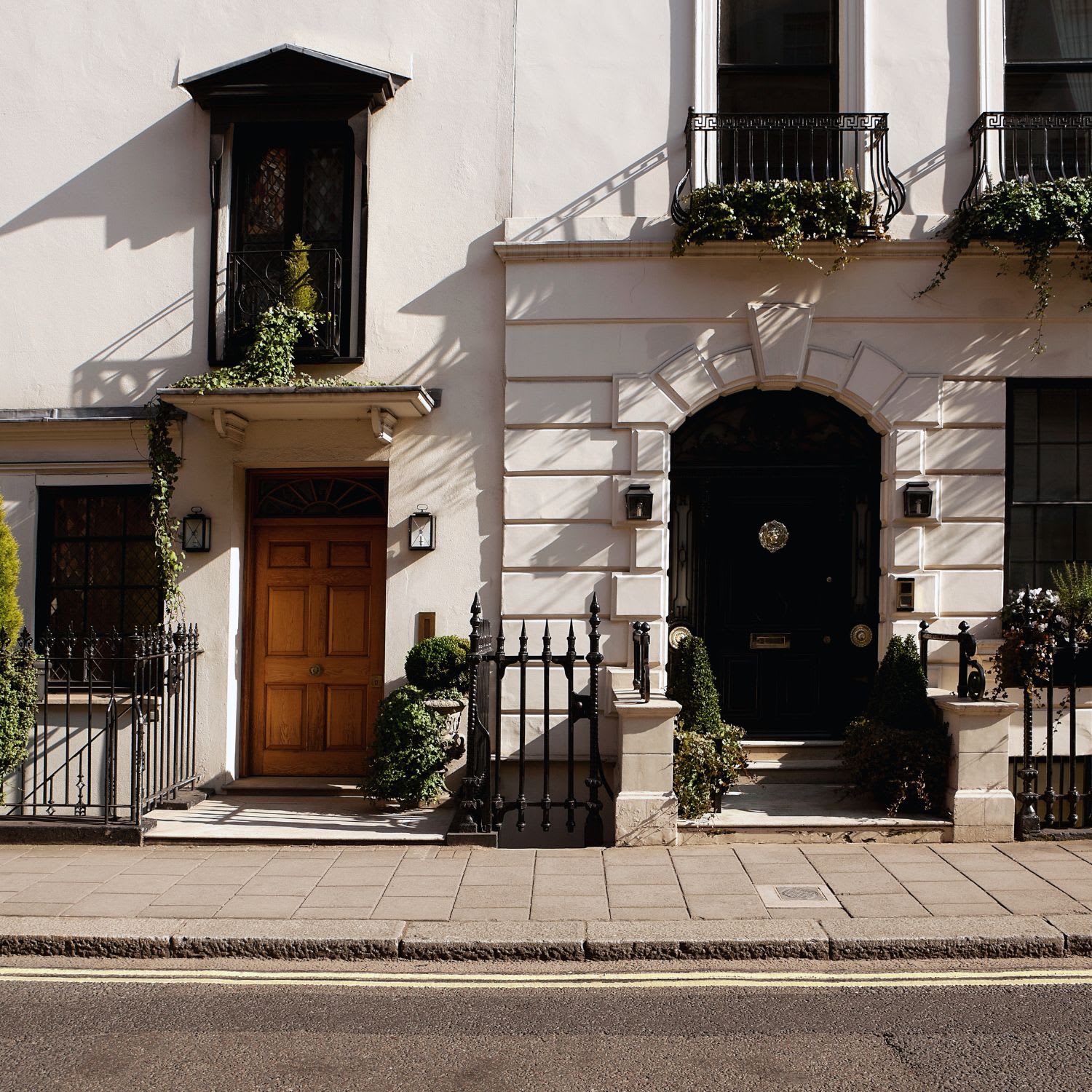
The architecture reflects that history. Georgian townhouses, Victorian mansion blocks, and Edwardian terraces line the streets. Many of them are listed buildings that cannot be substantially altered. That protection keeps the streetscape largely intact and reinforces the neighborhood’s prestige over time.
Grosvenor Square, Berkeley Square, and Mount Street are among the most recognizable addresses. Each carries its own character. All of them share the same fundamental appeal: a rare combination of central location, architectural beauty, and social cachet that very few neighborhoods anywhere in the world can match.
The Property Market at a Glance
Mayfair consistently ranks among the most expensive real estate markets globally. Prime residential properties regularly trade above £3,000 per square foot. Trophy assets on the most prestigious streets reach even significantly higher. The buyer profile is overwhelmingly international. Investors from the Gulf states, Russia, China, and the United States have long viewed Mayfair property as a stable store of value and a lifestyle asset.
London’s status as a global financial and cultural capital underpins that demand. That’s regardless of broader economic cycles. Supply is structurally limited. The neighborhood covers just over one square mile, and the density of listed buildings means new development is rare. When significant properties do come to market, competition can be intense.
Typical property types include:
- Georgian and Victorian townhouses, often spanning five to seven floors
- Lateral apartments within converted period buildings
- Penthouse residences in newer boutique developments
- Freehold and long-leasehold properties with significant square footage
Rental yields in Mayfair tend to be lower than other London markets, which reflects the nature of the buyer pool. Most purchasers are acquiring for long-term capital preservation or personal use rather than rental income.
Life in Mayfair
The lifestyle offering matches the real estate. Michelin-starred restaurants, private members clubs, flagship luxury retail, and some of London’s finest art galleries are all within walking distance of most addresses in the neighborhood. Mount Street and South Audley Street are the main retail corridors, home to international luxury brands alongside long-established British institutions.
The Connaught, Claridge’s, and The Dorchester are all either within or immediately adjacent to Mayfair, and their presence shapes the tone of the area. Green spaces are close by. Hyde Park borders the western edge of the neighborhood, and the smaller Grosvenor Square Gardens and Berkeley Square offer quieter spots within walking distance of most addresses.
Transport connections are excellent. Bond Street station, served by the Elizabeth line, the Central line, and the Jubilee line, sits at the northern edge of Mayfair and connects residents quickly to Heathrow, the City, and Canary Wharf.
What International Buyers Should Know
Purchasing property in London as a non-UK resident involves several considerations that differ from other global markets. Stamp Duty Land Tax (SDLT) applies to all residential purchases, and international buyers face an additional two percent surcharge on top of the standard rates. On a £10 million property, that adds up quickly. Legal and conveyancing costs, along with agent fees, should also be factored into total acquisition budgets.
Leasehold versus freehold is a distinction worth understanding clearly. Many Mayfair properties, particularly those on the Grosvenor Estate, are sold on long leaseholds rather than as freeholds. Lease length, ground rent terms, and service charges all affect value and should be reviewed thoroughly before proceeding. Currency considerations matter too.
Sterling fluctuations have historically created buying windows for international purchasers, particularly during periods of pound weakness. Working with an experienced luxury real estate agent who understands both the Mayfair market specifically and the needs of international buyers is essential at this price point. The difference between a well-structured acquisition and a costly mistake often comes down to local expertise.
Mayfair’s Place in the Global Luxury
Market Comparisons to other ultra-prime markets are inevitable. Monaco, Beverly Hills, and the Upper East Side of Manhattan all draw similar buyer profiles, but Mayfair holds a distinct position. London’s legal system, political stability, and cultural infrastructure make it a reliable destination for long-term capital.
Mayfair’s architectural heritage means the physical fabric of the neighborhood is protected in a way that newer luxury destinations simply cannot replicate. And the concentration of global institutions, from financial firms to embassies to auction houses, keeps demand anchored regardless of which direction individual markets move.
For buyers seeking a property that functions as both a world-class residence and a durable asset, Mayfair continues to make a compelling case.
Frequently Asked Questions
What makes Mayfair one of London’s most expensive neighborhoods?
Mayfair’s pricing reflects a combination of location, history, and scarcity. The neighborhood sits in the heart of central London, covers just over one square mile, and contains a high concentration of protected historic buildings. New development is extremely limited, which keeps supply tight. Demand from international high-net-worth buyers has remained consistent for decades, which supports values even during broader market downturns.
What types of properties are available in Mayfair?
The market includes Georgian and Victorian townhouses, lateral apartments within converted period buildings, penthouse residences in newer boutique developments, and a range of freehold and long-leasehold properties. Most of the housing stock dates from the 18th and 19th centuries, and many buildings carry listed status that limits alterations.
Can international buyers purchase property in Mayfair?
Yes. There are no restrictions on foreign nationals purchasing residential property in the United Kingdom. International buyers should be aware of the additional two percent Stamp Duty Land Tax surcharge that applies to non-UK residents, as well as standard SDLT rates, legal fees, and any applicable taxes in their home jurisdiction.
What is the difference between freehold and leasehold in Mayfair?
Freehold means the buyer owns the property and the land it sits on outright. Leasehold means the buyer owns the property for a defined period, after which ownership reverts to the freeholder unless the lease is extended. Many Mayfair properties sit on the Grosvenor Estate and are sold on long leaseholds. Lease length, ground rent, and service charge terms all affect the value and saleability of a leasehold property and should be reviewed carefully with a solicitor.
Is Mayfair a good investment for rental income?
Mayfair tends to offer lower rental yields than other London markets, which reflects the buyer profile and asset values involved. Most buyers at this price point are acquiring for capital preservation, long-term appreciation, or personal use rather than rental income. That said, short-term furnished lettings to corporate tenants and diplomats can command premium rates.
How does Mayfair compare to other global luxury real estate markets?
Mayfair is consistently ranked alongside Monaco, central Paris, and prime Manhattan as one of the world’s top ultra-prime markets. Its distinction lies in the combination of architectural heritage, legal and political stability, and the concentration of global institutions nearby. Supply constraints are more severe than in most comparable markets, which has historically supported long-term price resilience.